




You are viewing 1 of your 2 free articles
Q&A: Kathryn Kelly, executive chef and director of culinary enrichment, Oceania Cruises
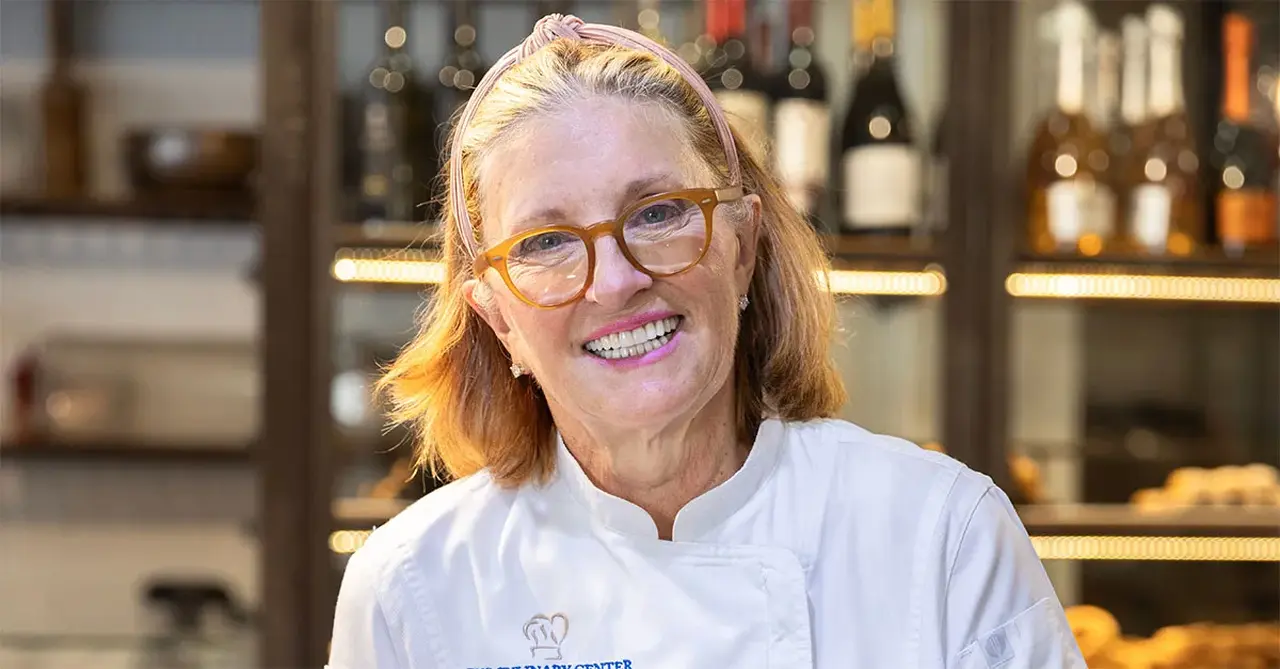
Oceania Cruises’ culinary director talks about the expansion of its cooking classes and chef-led tours around the world

Click here to download and save as a PDF
Q. Oceania Cruises has a reputation for food, but how did it go from eating in the restaurants to cooking in the Culinary Center?
A. We started 15 years ago with a hands-on cooking class on Marina, where we developed a curriculum and a Culinary Center. Back then, we had a tiny space dedicated to our cooking school and we used to go out and buy food at markets and bring it back for the chefs.
Then we opened on Riviera and, lo and behold, we realised it was really popular with our guests – they loved it. I’m 70 now and I was 55 then, and from the very beginning, it struck me that if you respect that people can learn at any age, it’s magical.
Q. What do the classes entail?
A. We created the programme around what our guests wanted, which was learning technique and hands-on cooking. We initially had 20 classes; we now have 65 and we’re launching another 46 this year. We have an amazing team of instructors and we do all of the set-up for guests, so they can concentrate on the cooking – there’s no peeling onions.
They come into the Culinary Center and we make three dishes, drink some wine or some cocktails, and they all get a recipe handout as they leave. Each class has a theme because our team, in addition to being professional chefs, are storytellers.
Q. How do you extend the programme to your shore excursions?
A. The growth of the classes was driven by guests asking what to do in each port, where we would be going to a market or an olive grove – over time that turned into our chef-led tours. Now we have 65 worldwide. We’ll go to a spice farm in Belize, then learn how to buy, bloom, store and grind spices at home.
The tours are for no more than 18 people, four to five hours long; we meet in the Culinary Center then go on a little adventure. In Istanbul, we work with a chef who is so dedicated, he learnt the now-defunct Ottoman Turkish language so he could translate recipes from what was Constantinople into modern English.
He found recipes from the Topkapi Palace that showed ordinary people preparing feasts using saffron, cardamom, limes and lemons, so they were familiar with ingredients from all over the world, which is why Turkish cuisine is so sophisticated.
Q. What do you hope guests take away from the experience?
A. There’s gastronomy, history and technique in every class. If we’re travelling in the Caribbean, we’ll learn about how each island is unique – some are influenced by Africa, Mesoamerica, South America or Portugal. So when we do a class, we make it a passport to the Caribbean.
We pick four islands you’re going to visit and we prepare cocktails, entrées and desserts to learn how different Saint Lucia is from St Kitts or Belize, for example. We try to teach you about where you’re travelling through the lens of the cuisine.
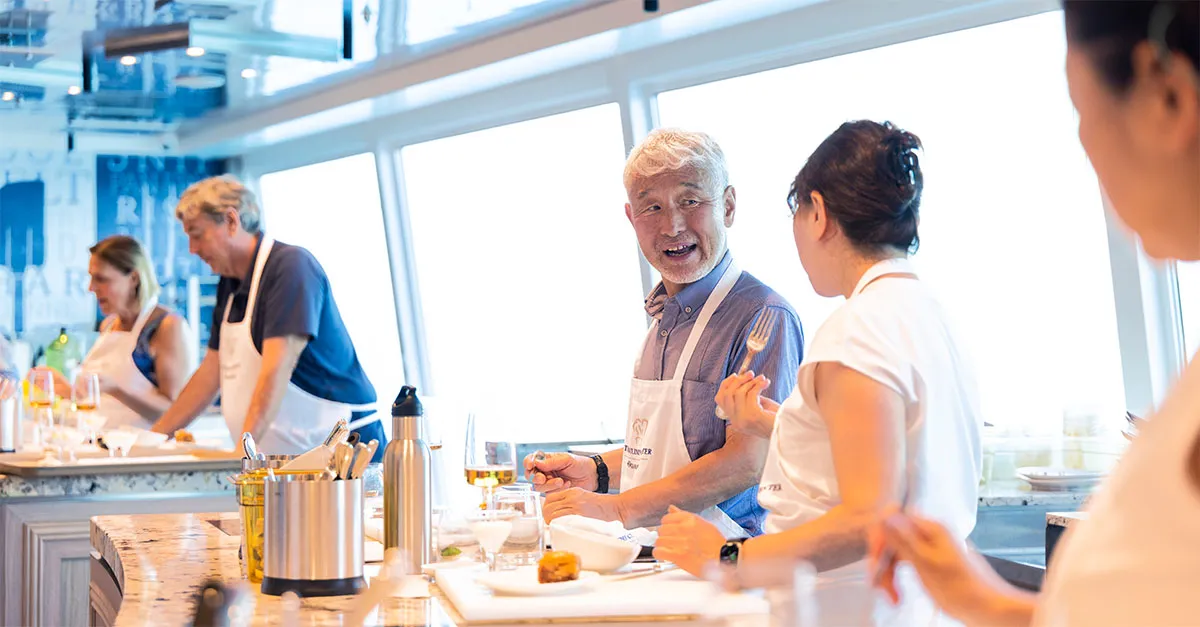
Image credit: Stephen Beaudet
Lead image credit: Stephen Beaudet




Jacobs Media is a company registered in England and Wales, company number 08713328. 3rd Floor, 52 Grosvenor Gardens, London SW1W 0AU
© 2025 Jacobs Media
